
General Note
Yuji Horii’s AI Game and the “AI Allergy”
A look at the backlash to Yuji Horii’s AI-made game, and at what should matter when new tools enter creative work.
Yuji Horii made and released a short mystery game called “The Interrogation Room: Komiya” using generative AI. He made it available for free. In his X post, Horii said it took about 30 minutes. He also looked back at making “The Portopia Serial Murder Case,” when he wrote the story, drew the pictures, and programmed the game himself, and said he was astonished that AI could now make a reasonably complete game from instructions alone.
Some people were excited by the possibility. Others reacted negatively. The responses that stood out included questions about copyright and training data, disappointment that someone like Horii would use AI so casually, and requests not to use AI in “Dragon Quest.” These are some of the reactions that appeared in search results, not a claim about what everyone on X thinks.
Even so, they seem to capture something important about the current mood around AI.
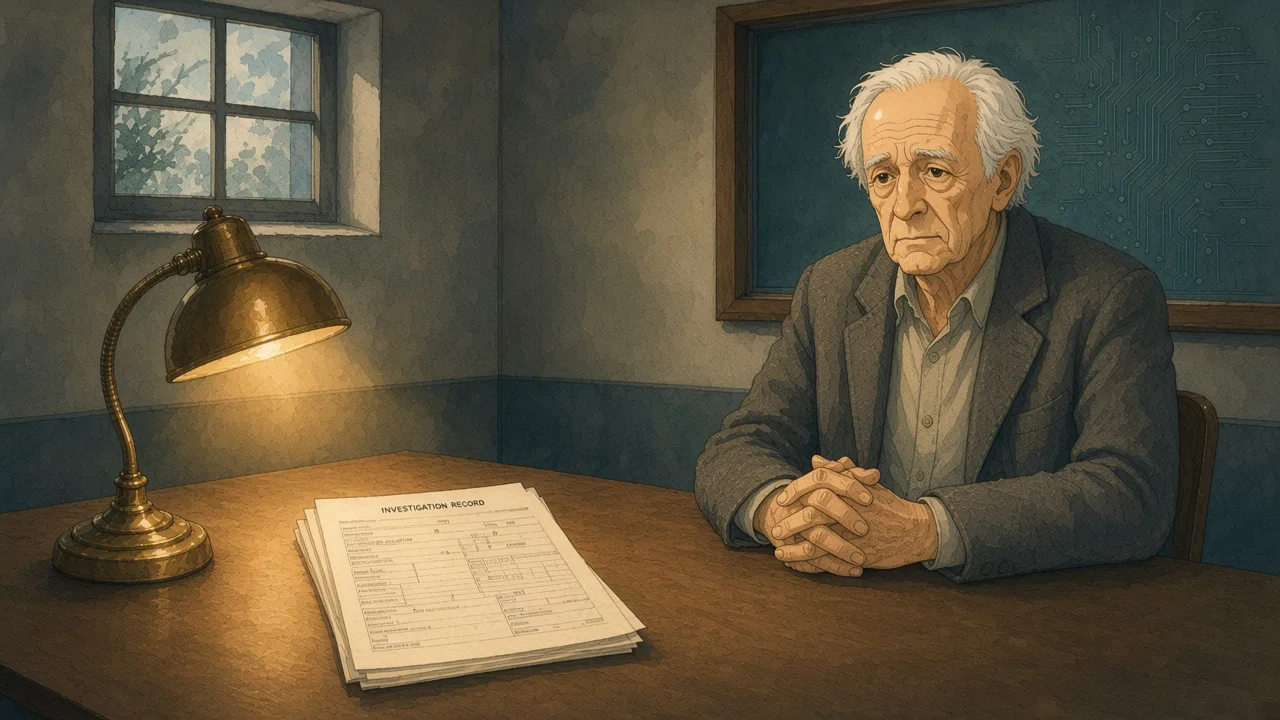
Where does “I don’t want Horii to use AI” come from?
“A famous creator should not use AI.” “If he uses it, he should at least be much more careful.” Those reactions cannot be explained by technical arguments alone.
For people who have followed Horii for a long time, the human work behind the games is part of the story. The account of making “The Portopia Serial Murder Case” by thinking up the story, drawing the art, and writing the program has become part of Yuji Horii’s origin story as a creator. When a new tool called AI enters that story, some people may feel that the image they trusted is being broken.
“How could someone like Yuji Horii do this?” also contains the reverse side of admiration. It does not necessarily mean that nobody should use AI. It can mean: I did not want you, of all people, to do this. People want creators they love to remain the person they have imagined.
That feeling is understandable. But it still leaves a question. Should an audience be able to decide which tools a creator is allowed to use? The image fans have of an author is not the author’s entire life. People are free to dislike Horii’s use of AI, but that does not give them the right to prohibit the use itself.
The “AI allergy”
Here is a deliberately strong phrase. When someone rejects a work or its creator simply because AI was used, I feel tempted to call it an “AI allergy.”
I do not mean a real medical condition. It is a metaphor. I also do not want to dismiss every criticism of AI as thoughtless rejection. Concerns about training data, rights in generated output, permission to use source material, and the effect on people’s work are all legitimate concerns.
What makes me uncomfortable is the reaction that decides AI is evil before checking any of those concrete questions. The output is not examined. The way it was used is not investigated. The work is not considered on its own terms. The word AI alone is enough to shut down the conversation. That looks less like a reasoned objection and more like a reflex.
There is understandable anxiety behind that reflex. AI may replace parts of people’s work. Skills that took years to develop may seem less valuable. I am not interested in mocking those feelings. But having a feeling and using that feeling to condemn someone else’s work are different things.
The first concrete questions are about rights and use
When I think about AI in creative work, rights are the first thing I want to check. Did the source materials come with permission? What conditions apply to the training or generation system? Is the output too close to a particular work or artist? Does the contract allow the result to be published or sold? These questions cannot be left vague.
Still, saying that rights are the only issue would also be too simple. Who is responsible for quality? How much explanation does the creator owe as the author? How does AI change whose work is commissioned or valued? In what situations should the audience be told that AI was involved? These are separate questions.
The useful approach is to check specific problems one by one instead of treating AI use itself as a crime. “It is legal, so everything is fine” is not a complete ethical position. But “AI was used, so it is illegal” or “the work has no value” is not accurate either.
People are influenced by other people’s work all the time. We combine memories, experiences, and things we have seen to make something new. AI also learns patterns from a large amount of data and assembles an answer to a prompt. The two processes are not the same. A person has embodied experience and can digest an influence, choosing what to keep and what to discard. AI systems operate at a different scale, through processes that are difficult to see, and their outputs can sometimes resemble a specific work too closely.
So I am not saying that people and AI are exactly the same because both can be influenced. There are important differences. But there is also a long distance between thinking carefully about those differences and calling every AI-assisted work theft.
Why does it feel like cheating?
I understand why AI can feel like cheating.
In creative work, learning to draw, write code, or revise prose has traditionally been part of becoming a maker. AI can cover parts of that path in a short time. Someone who spent years developing a skill may feel that another person is skipping the road they had to walk.
I sometimes feel uncomfortable using AI myself. Something I did not build entirely by hand takes shape in front of me. It would be a lie to say that never feels strange.
But that discomfort will not change the direction of the world. The question is how to make and live in a world that has changed. A feeling can be part of my own decision-making, but it is not automatically an argument for controlling someone else.
If it helps, use it
As long as the rights and contracts have been checked and the creator takes responsibility for the use, I think people should use AI freely.
This is especially true in independent development, where implementation time and physical energy are serious constraints. Build a prototype to test an idea. Put a screen in motion and find out how it feels to play. Reach for things that used to be abandoned because the technical barrier was too high. AI is a powerful tool for all of that.
There is a reasonable argument that famous creators need to be more careful because their choices have a larger effect. A major commercial work should come with greater responsibility for rights clearance, quality control, and communication.
But “you are famous, so you must not use it” feels wrong to me. A creator may lose fans or receive criticism. That is part of the choice the creator has to own. Online, a few loud voices can easily look like the opinion of every user. There is no need to be controlled by every reaction.
That does not mean ignoring healthy criticism. If someone points out a specific rights problem or offers criticism that could improve the work, it should be taken seriously. Destruction, obstruction, and personal attacks are not necessary. If you disagree, engage with the work and the issue.
I want to see what remains in the work
When I experience a game, I care about whether it stays with me. Can I feel the creator’s care? Was the experience worth the time? Does something remain after it ends?
The tool used to make it comes after those questions. Tools do change the content and the conditions of production. AI does not automatically make a good work, and avoiding AI does not automatically make a work sincere.
Using AI should not reduce a work’s value to zero. Using AI should not make a work valuable merely because it is new, either. The work itself and the choices inside it deserve attention.
With “The Interrogation Room: Komiya,” it is more useful to know what came from Horii’s ideas, what came from AI, what instructions he gave, what he changed, and what he rejected than to decide everything from the single fact that AI was involved.
AI alone tends toward sameness
AI can turn a rough idea into a shape quickly. We will probably see a large number of similar and unfinished works. There may be a period when the industry has to let a certain amount of this excess run its course.
After that, we will have to find a balance between what AI should do and what people should decide. If everything is handed to AI, the result will move toward the familiar and the average. That is what a tool built to produce the most plausible answer from many examples tends to do.
If we want to make something warped, difficult to explain, slightly wrong, and impossible to forget, we have to move outside the average. That requires the maker’s bias and obsession. The important question may not be whether AI was used, but whether the creator can reject AI’s plausible answer and choose again according to a personal sense of taste.
AI is not a tool that ends creativity. It is a tool that changes how creativity is practiced. Early in a change, roughness and confusion are unavoidable. We can sort out rights and labor questions, learn better ways to use the tools, and update the way we judge work.
Horii’s post does not require people who use AI and people who do not to attack each other. The feeling of “I wish he had not used it” and the feeling of “why not use it?” can both be acknowledged as feelings. Then we can ask what remains in the work, whether anyone has been treated unfairly, and what we want to make next.